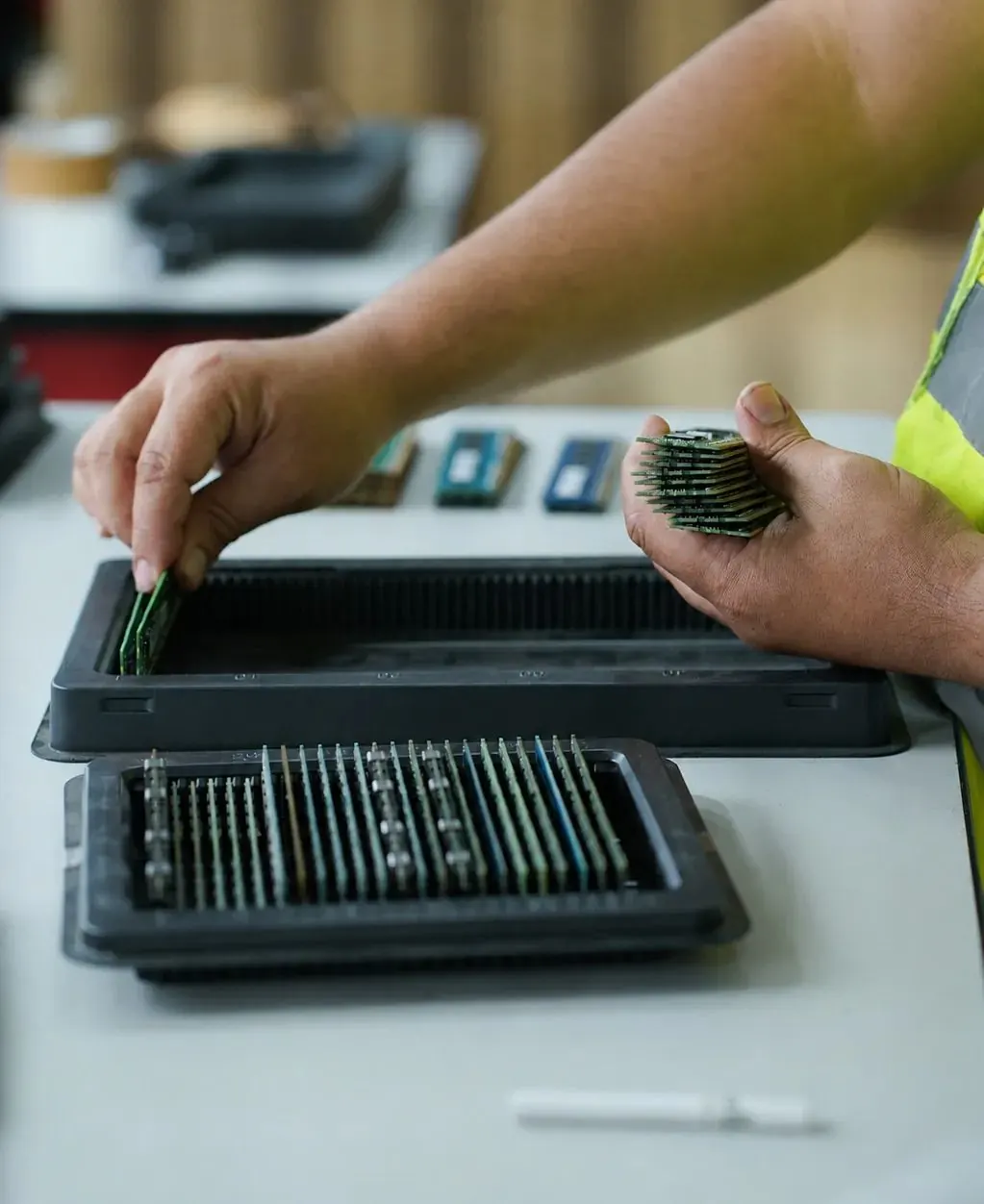
Used IT is priced against the secondary market: what the same model, in the same condition, sells for today. Because markets move, a reputable buyer quotes per device and fixes the price for a set period. These are the factors that decide where your equipment lands.
1. Model and age
The single biggest factor. Laptops and desktops that can run current operating systems keep most of their value; older ones are often priced for parts. Phones and Macs hold value longest. Servers are priced by platform generation.
2. Specification
Processor, memory, storage and screen all matter for laptops and desktops. For servers, processors and memory usually make up most of the value. For networking, port speeds and series matter.
3. Condition grade
Devices are typically graded from A (near new) to C or D (heavy wear or faults). Screens, keyboards, housings and batteries are checked. Non-working devices still have parts value.
4. Locks and management
BIOS passwords, MDM enrolment, Activation Lock and Google FRP can reduce a device to parts value. Releasing devices before sale is the easiest way to protect the price. See our preparation checklist.
5. Completeness
Missing drives, chargers, stands, rails or power supplies all lower the price. Leaving drives in and asking for certified erasure keeps units complete.
6. Quantity and uniformity
Large batches of the same model sell faster and command better unit prices than mixed small lots.
7. Timing
Value falls over time, and new model launches push older prices down. Selling soon after a refresh, rather than storing equipment for a year, usually returns more.
How to get an accurate quote
Send a list with model, serial or service tag, specification and condition. A precise list gets you a precise, per-device price.
Need this done for you?
Gulf Asset Services buys used IT across the GCC and destroys the data on every device, with a certificate per serial number.
Get a quote in 24 hours